
A chipped tooth can happen when you least expect it - even at work. Whether you were lifting equipment, slipped on a wet floor, got hit during a workplace accident, or simply bit down on something hard during lunch, a chipped tooth can quickly go from an “oops” to a painful dental emergency.
The first question most people ask is: "Do I need to see an emergency dentist right away?"
The answer usually depends on how badly you chipped the tooth. Some small chips may only affect the outer enamel, while larger fractures can expose sensitive nerves, cause bad pain, and put your tooth at risk of infection.
If you've chipped a tooth at work in Portland, here's what you should do immediately and how to know when emergency dental treatment is necessary.
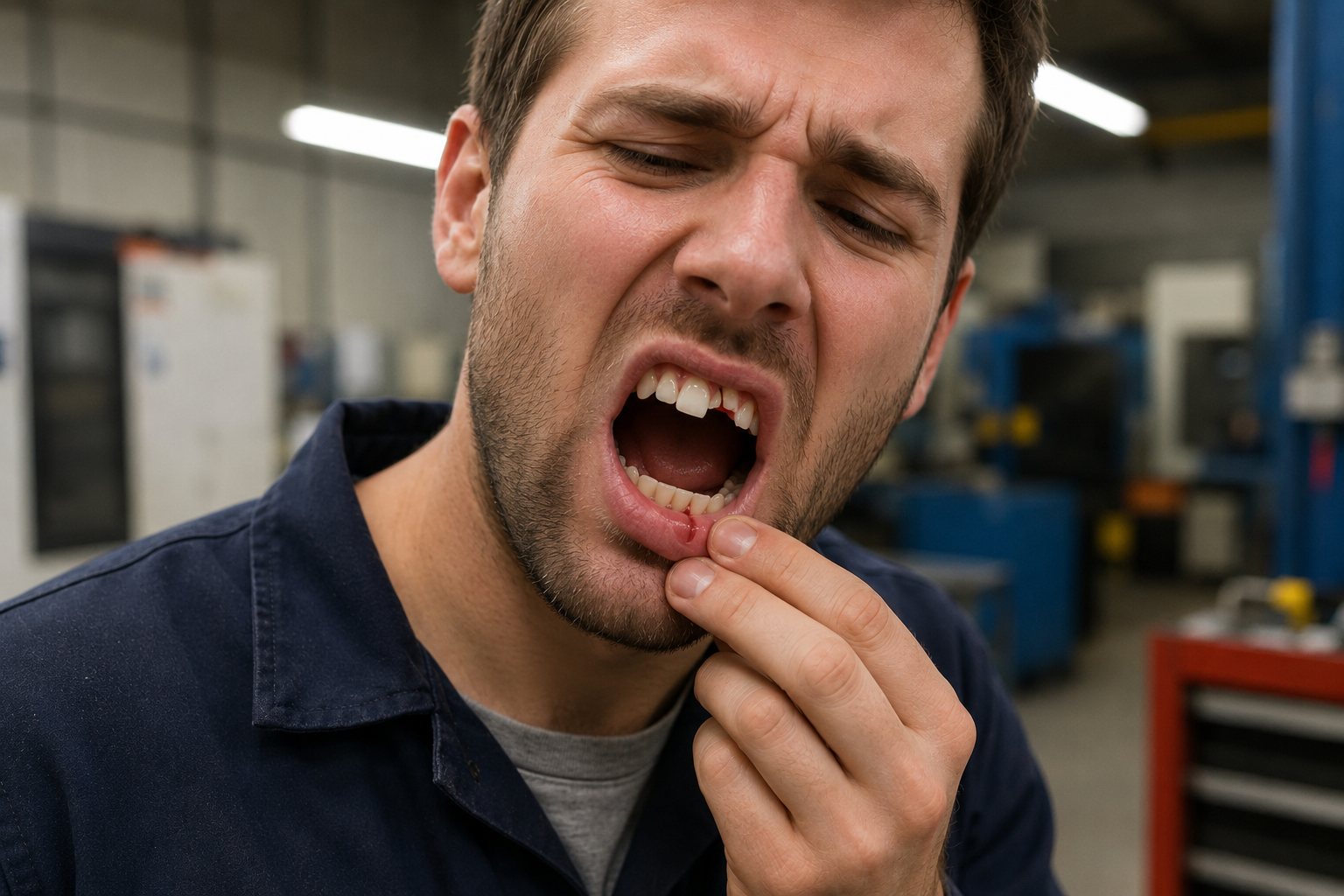
Step 1: Stay Calm and Assess the Damage
Not every chipped tooth requires an emergency room visit, but every chipped tooth should be evaluated by a dentist as soon as possible.
Check for:
- Pain when biting or chewing
- Sharp edges cutting your tongue or cheek
- Sensitivity to hot or cold foods
- Bleeding around the tooth or gums
- A large missing piece of the tooth
- Visible cracks extending into the tooth
- Swelling around the tooth or gums
Even if the chip seems small, damage beneath the surface may not be immediately visible. Cracks can continue spreading deeper into the tooth over time. Chipped teeth should be evaluated quickly to prevent additional complications.
Step 2: Save Any Broken Pieces
If part of the tooth broke off, try to locate the fragment.
Rinse it gently with water and place it in:
- Milk
- Saline solution
- A clean container with saliva
Bring the piece with you to your appointment. In some situations, portions of the tooth can be reattached or used to assist with treatment planning.
Step 3: Rinse Your Mouth
Use warm water or a mild saltwater rinse to clean the area and remove debris.
If there is bleeding:
- Apply clean gauze
- Use gentle pressure for 10–15 minutes
- Avoid touching the damaged area unnecessarily
This can help reduce irritation until you are seen by an emergency dentist.
Step 4: Reduce Swelling and Pain
If the injury caused swelling, apply a cold compress to the outside of your cheek for 15–20 minutes at a time.
You can also use over-the-counter pain relievers as directed.
Avoid:
- Extremely hot foods
- Ice chewing
- Hard or crunchy foods
- Using the damaged tooth for chewing
These temporary measures can help control discomfort until treatment is available.
When Is a Chipped Tooth a Dental Emergency?
Many minor chips can wait a short time for treatment, but some situations require immediate dental care.
You should contact an emergency dentist immediately if:
- The tooth is causing severe pain
- The tooth is cracked deep into the structure
- A large portion of the tooth is missing
- You see red or pink tissue inside the tooth
- There is swelling around the tooth or face
- The tooth feels loose
- Bleeding will not stop
- You have signs of infection
When the inner dentin or pulp becomes exposed, bacteria can enter the tooth and potentially lead to infection, abscesses, or tooth loss if left untreated.
Common Emergency Treatments for a Chipped Tooth
Treatment depends on how much damage occurred.
Dental Bonding for Minor Chips
For small chips, tooth-colored bonding can often restore the tooth's shape and appearance quickly.
Dental Crowns for Larger Fractures
If a significant portion of the tooth is damaged, a dental crown may be recommended to strengthen and protect the remaining tooth structure.
Emergency Root Canal Treatment
If the chip extends into the nerve of the tooth, an emergency root canal may be necessary to remove infection and save the tooth.
Tooth Extractions
In really bad cases where the tooth cannot be fixed, an emergency tooth extraction may be necessary.
These treatment options help restore function, relieve pain, and prevent further damage.
What If the Tooth Doesn't Hurt?
Not experiencing pain when you chipped your tooth doesn't always mean everything is OK. One of the biggest mistakes people make after chipping a tooth is assuming everything is fine because there is no pain. Not all dental cracks or chips hurt immediately.
Some cracks develop gradually and may not reach the nerve right away. However, untreated fractures can worsen over time and eventually lead to infection, nerve damage, or tooth loss. Even painless chips should be evaluated by a dentist as soon as possible.
Can Workers' Compensation Cover a Chipped Tooth at Work?
This is a great question we get asked on occasion, as dental treatments can be costly. If your chipped tooth occurred during a workplace accident, you may be eligible for workers' compensation benefits depending on the circumstances and your employer's coverage. Our recommendation is to document the injury immediately and report it to your workplace. They may recommend a dentist for the treatment, but you can call us to ensure you get the best care. As an emergency dentist in Portland, we help prevent the damage from worsening.
Same-Day Emergency Dental Care for Chipped Teeth in Portland
A chipped tooth may seem minor at first, but delaying treatment can increase the risk of infection, pain, and more extensive dental procedures later.
If you've chipped a tooth at work, are experiencing pain, or aren't sure how serious the damage is, contact Emergency Dentist Portland right away. Our team provides same-day emergency dental appointments to diagnose the problem, relieve discomfort, and help save your tooth whenever possible.
The sooner you seek treatment, the better the chances of preventing further damage and restoring your smile quickly.