
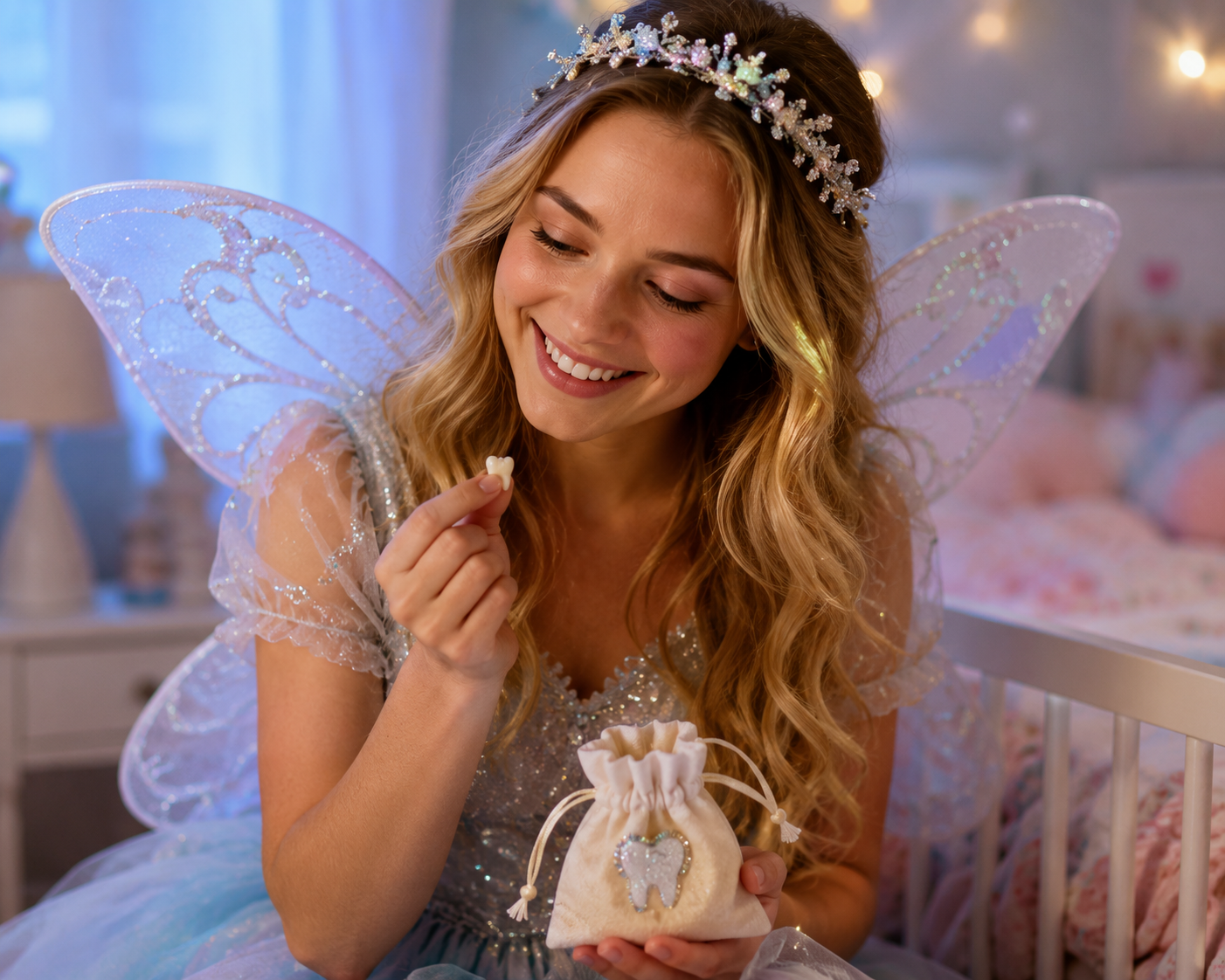
Losing a baby tooth is an exciting milestone for children, and for many families who partake in the tradition, it comes with a special visit from the Tooth Fairy. A tiny tooth tucked under a pillow magically transforms into a small gift or a few dollars by morning. But have you ever wondered where this tradition actually came from?
While the Tooth Fairy has become a familiar part of childhood in the United States, the story behind this beloved character stretches back hundreds of years and includes customs from cultures around the world.
The Tooth Fairy Didn't Start as a Fairy
Believe it or not, the Tooth Fairy is a relatively modern invention.
Long before the fairy became part of popular culture, parents around the world celebrated the loss of baby teeth in very different ways. In many ancient cultures, baby teeth were thought to have special powers or spiritual significance. Families believed they needed to dispose of them carefully to protect children from bad luck or evil spirits.
Some traditions included:
- Burying the tooth in the ground
- Burning the tooth in a fire
- Throwing the tooth onto a roof
- Tossing it toward the sun
- Placing it in a special location to encourage healthy adult teeth
These customs were meant to ensure children grew up healthy and strong.
Ancient Beliefs About Baby Teeth
Historians have found that cultures across Europe, Asia, Africa, and the Middle East all had unique traditions involving children's lost teeth.
In medieval Europe, people often buried baby teeth because they believed a person would need every part of their body in the afterlife.
In parts of Scandinavia, children were sometimes paid for their first lost tooth. This payment, known as a "tooth fee," is considered one of the earliest traditions resembling today's Tooth Fairy.
Other cultures believed animals played an important role. Children might throw a tooth outside while asking a mouse, rat, or squirrel to replace it with a strong adult tooth.
When Did the Tooth Fairy Appear?
The Tooth Fairy as we know it today didn't become popular until the early 1900s.
The first known published reference to a Tooth Fairy appeared in 1908 in the Chicago Daily Tribune. Parents were encouraged to leave small rewards under their children's pillows to celebrate losing a baby tooth.
Throughout the 1920s and 1930s, children's books and stories helped spread the idea of a magical fairy collecting baby teeth.
By the mid-20th century, the tradition had become a common part of growing up in the United States.
Why Do We Celebrate Losing Baby Teeth?
Besides being fun, the Tooth Fairy tradition helps children view losing teeth as an exciting milestone rather than something scary.
Baby teeth usually begin falling out around age six and continue until about age twelve. Since loose teeth can sometimes feel strange or even a little frightening, celebrating the event can make children feel proud instead of nervous.
Parents often use the Tooth Fairy to:
- Celebrate growing up
- Encourage good brushing and flossing habits
- Ease fears about losing teeth
- Create lasting family memories
- Reward children for taking care of their smiles
Tooth Fairy Traditions Around the World
Not every country has a Tooth Fairy.
Many cultures have their own unique traditions for lost baby teeth.
Spain and Latin America
Instead of a fairy, many children look forward to a visit from Ratoncito Pérez, or Pérez the Mouse. The famous little mouse collects children's teeth while they sleep and leaves behind a small gift or money.
France
Children often leave their tooth under their pillow for La Petite Souris, or "The Little Mouse," who exchanges it for a reward.
Japan
Japanese children have a different custom depending on which tooth falls out.
When an upper tooth comes out, it's often thrown toward the ground. Lower teeth are tossed onto the roof. The tradition symbolizes encouraging the new tooth to grow straight.
Egypt and the Middle East
Some children throw their baby teeth toward the sky or the sun while making a wish for healthy adult teeth.
Although the customs vary, many cultures celebrate the same exciting milestone.
How Much Does the Tooth Fairy Leave Today?
The amount varies from family to family.
Some parents leave:
- $1 bills
- Gold dollar coins
- Small toys
- Books
- Toothbrushes
- Special notes from the Tooth Fairy
The goal isn't the amount—it's making the experience memorable.
Teaching Good Oral Health Along the Way
The Tooth Fairy can also be a great opportunity to teach children about caring for their smiles.
Parents often remind children that healthy, clean teeth make the Tooth Fairy extra happy. While that's a fun story, it also encourages kids to brush twice a day, floss regularly, and visit the dentist for routine care.
Regular children's dental exams and cleanings help ensure baby teeth stay healthy until they're ready to fall out naturally.